




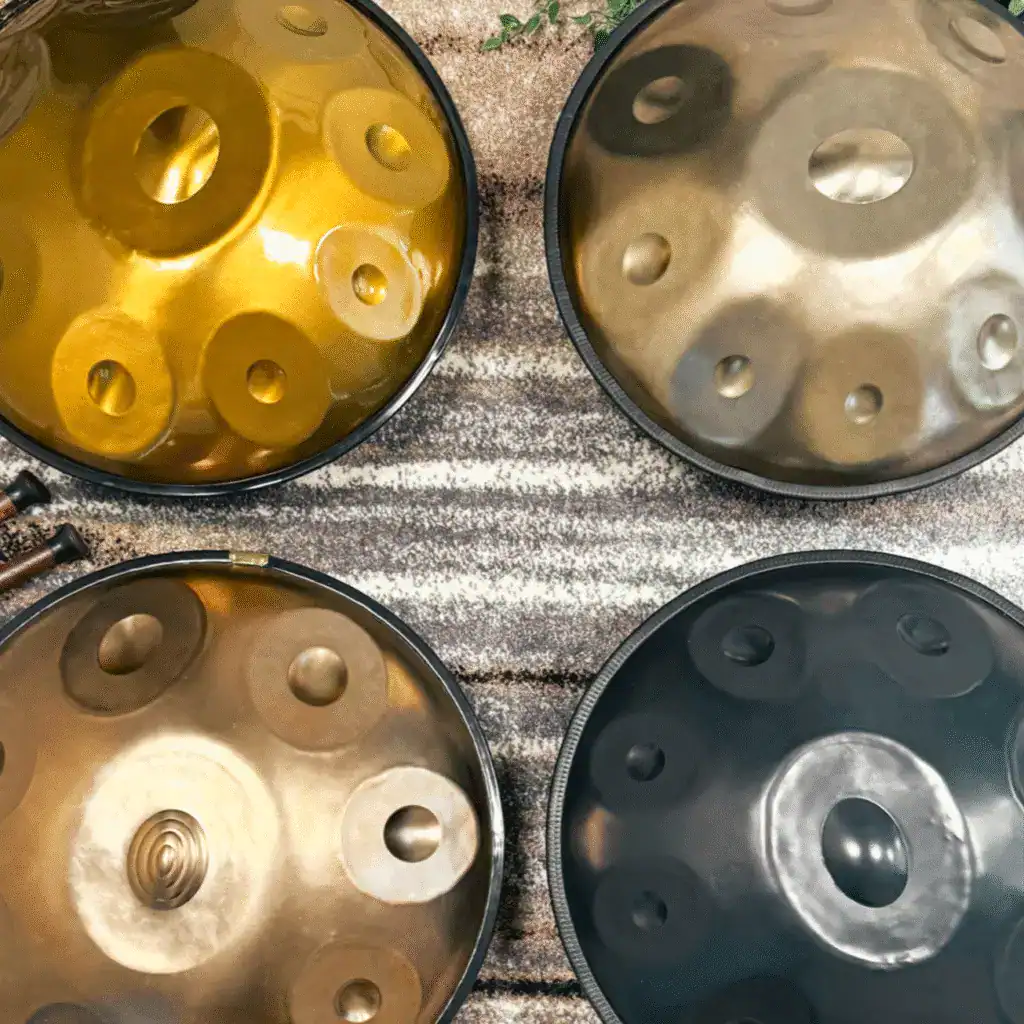
THE MAGIC OF THE HANDPAN
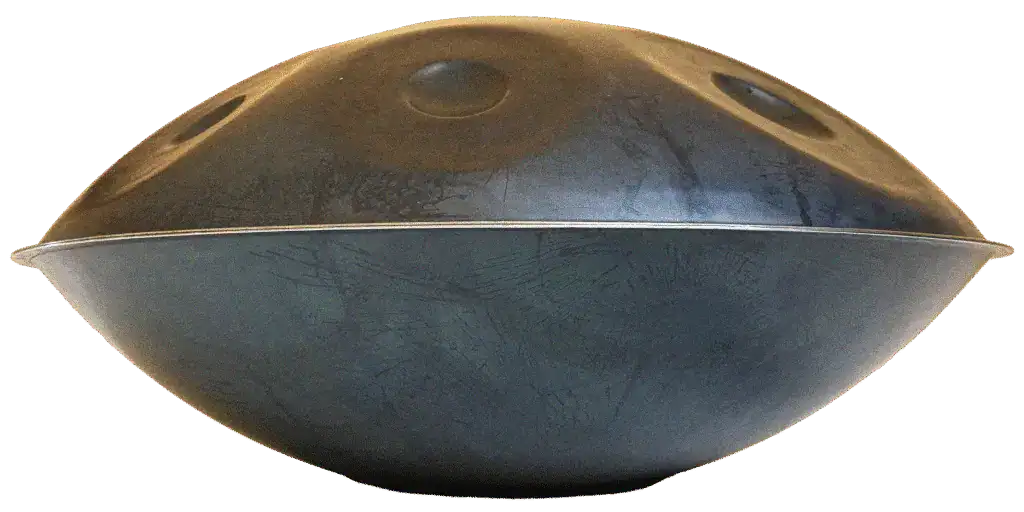
the favorite flying saucer
What is Handpan?
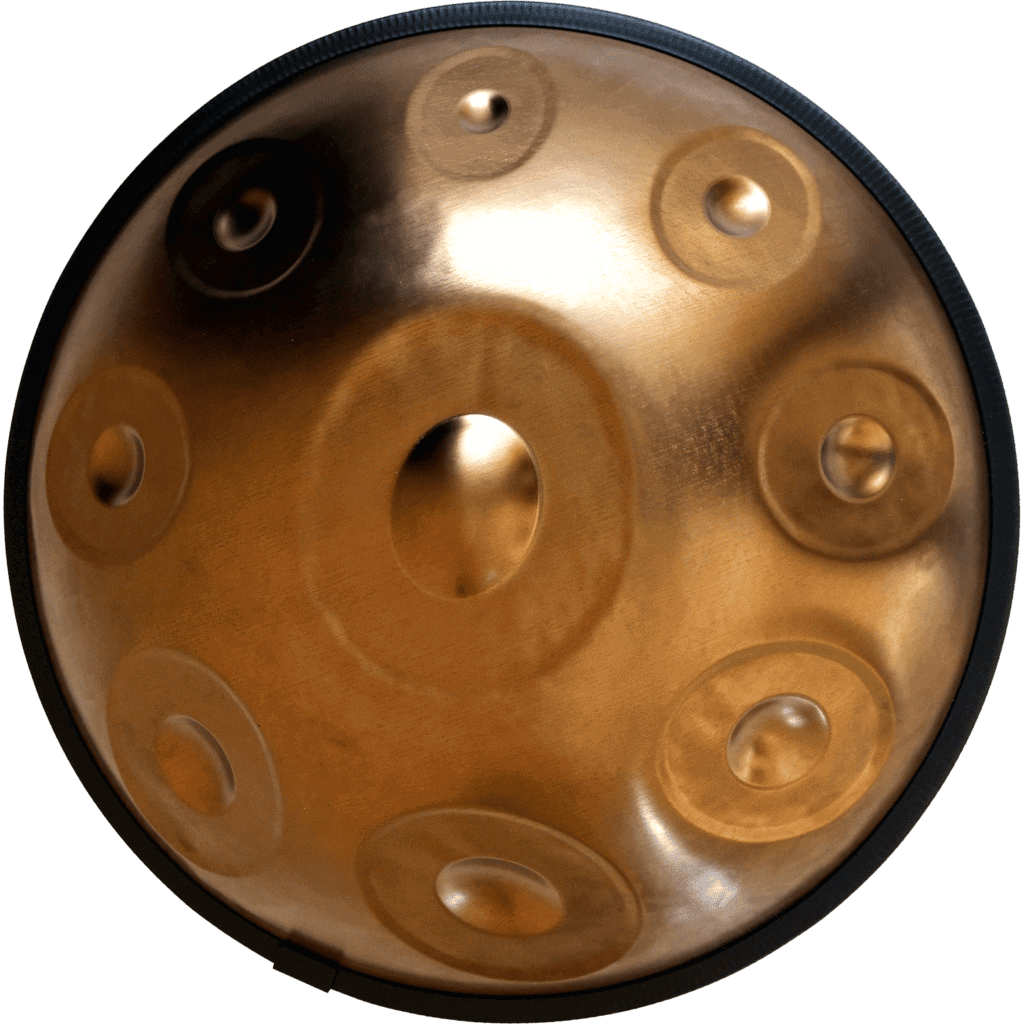
The handpan is a melodic percussion instrument that combines rhythm and harmony in one captivating sound. It is made of metal with carefully tuned tonal zones and creates ethereal, deep, and resonant sounds reminiscent of a harp, steel drum, and gong all in one.
The handpan is intuitive to play – even without musical experience, you can easily create meditative melodies and rhythms. It is used for relaxation, sound meditations, improvisations, and concerts, and its vibrations have a deeply calming effect.
Who is it best for?
you can play too
The seeker of inner peace and balance
For people with busy schedules who need a quick way to relieve stress and restore their inner balance through sound.
The Wellness Practitioner
For yoga teachers, meditators, and therapists who want to enrich their practices with deep, harmonious vibrations for energy balancing.
The Little Explorer
For children who are curious about sound. This instrument is perfect for developing fine motor skills, a sense of rhythm, and creativity in a fun and accessible way.
The Intuitive Musician
For anyone who wants to create rich music right away, without having to learn complicated theory—perfect for beginners who trust their instincts.
The Social Artist
За хората, които обичат споделеното преживяване и търсят инструмент, който се вписва перфектно в групови импровизации и джем сешъни.
The handpan is a relatively new musical instrument, but it has deep roots in the percussion tradition. Also known as handpan, hang, heng drum, or pantam, it combines rhythm and melody in a unique way.
The first instruments of this type appeared in 2000, inspired by the steel drums of Trinidad and Tobago. However, its sound is softer, more ethereal and harmonious – almost cosmic.
Today, this sound is a global phenomenon – it can be found everywhere: from street musicians and yoga studios to meditation videos and large stages. The handpan creates more than music – it is an experience that touches the mind and heart, bringing inner peace and creative freedom.
Until recently rare and difficult to obtain, today our favorite instrument is increasingly becoming a faithful companion to those seeking sound, silence, and connection with themselves. And we are here to build a bridge between you and your new handpan -with care, ease, and joy from the very first sound.
IMMERSE YOURSELF IN
The History of the Handpan
The handpan is a relatively new musical instrument, but it has deep roots in the percussion tradition. Also known as handpan, hang, heng drum, or pantam, it combines rhythm and melody in a unique way.
The first instruments of this type appeared in 2000, inspired by the steel drums of Trinidad and Tobago. However, its sound is softer, more ethereal and harmonious – almost cosmic.
Today, this sound is a global phenomenon – it can be found everywhere: from street musicians and yoga studios to meditation videos and large stages. The handpan creates more than music – it is an experience that touches the mind and heart, bringing inner peace and creative freedom.
Until recently rare and difficult to obtain, today our favorite instrument is increasingly becoming a faithful companion to those seeking sound, silence, and connection with themselves. And we are here to build a bridge between you and your new handpan -with care, ease, and joy from the very first sound.
идеален за навлизане в света на музиката
What makes the handpan so versatile?
Intuitive and easy
No complicated notes or music theory. Just touch it and the sound comes to life. Just a quick tutorial or online video separates you from creating beautiful, harmonious melodies.
Perfect sound every time
Each scale on the handpan is pre-tuned, which means that as long as the instrument is of good quality, there are no false notes. No matter how you play, the sound is always pleasant and melodic.
For music and relaxation
As a musical instrument, it combines rhythm, harmony, and melody, making it extremely versatile and comprehensive. As a means of calming the mind and meditation, it helps reduce stress and improve concentration.
TYPES OF HANDPAN
How to choose a handpan?
The handpan is handmade and its sound depends on 1) the scale (tonality), 2) the material (type of steel), 3) the number of notes, and 4) the frequency at which it is tuned.
External features such as color and design are secondary – in many cases, instruments that look different can sound very similar. However, each handpan is unique, and choosing an instrument often goes beyond comparisons and parameters and boils down to finding an instrument that inspires you and suits your style and feel.
4) Frequency - 440 Hz or 432 Hz?
440 Hz is the appropriate option for playing with other instruments, as it matches the standard frequency of modern musical instruments and provides maximum flexibility.
432 Hz is a softer, meditative tuning associated with natural and harmonious vibrations. It is chosen for individual practice and sound therapy.
1) Scale
(or tonality)
Each handpan is pre-tuned to specific notes arranged in a specific sequence that determines the characteristic sound of the instrument.
The most common tonality is D Kurd (D minor), and other relatively widespread ones are Amara/Celtic, Hijaz, Pygmy, and Aegean.
3) Number of notes
High-quality handpans start at 8-9 notes, providing balanced tonality and ease of play for beginners and advanced players alike.
Extended instruments have 10-12 notes, as well as double-sided handpans with additional tonal zones. The greater number of notes creates more musical possibilities, but also presents a greater challenge when playing.
2) Material
Handpans are made from different types of steel. The most common type is stainless steel, which gives a longer sustain with a bright and ethereal tone, suitable for meditative music.
Alternative options are nitrided steel and ember steel - with a shorter but distinct tone, preferred for rhythmic and percussive playing.

FREQUENCY
440 Hz vs 432 Hz
When choosing a handpan, the tuning of the instrument plays a key role in its sound and impact on the listener. The most common settings are 440 Hz, which is the international standard, and 432 Hz, preferred by lovers of more natural and harmonious tones.
440 Hz is the standard frequency used in modern music. In this setting, the tone La (A4) vibrates at 440 cycles per second, producing a clear and energetic sound. Handpans tuned to 440 Hz are ideal for scenes requiring precision and dynamics, while offering a bright and versatile sound.
On the other hand, 432 Hz is an alternative setting that is often described as “more natural” and “more harmonious”. At this frequency, the tone La (A4) vibrates slightly slower – at 432 cycles per second. This gives the sound a softness and warmth, a sense of balance and calm. Many musicians and listeners believe that 432 Hz resonates better with nature and the human body, making it preferred for meditation, therapy and spiritual music.
The difference between 440 Hz and 432 Hz is only 8 Hz, but for many it is noticeable. 440 Hz is often described as “brighter and more active sounding”, while 432 Hz has a “soothing and smooth effect”.
If you are looking for an instrument for classical performances or playing with other musicians, the 440 Hz will be the right choice. However, if you want to use your handpan for meditation, relaxation, or therapy, the 432 Hz setting may offer just the “more spiritual” and harmonious sound you’re looking for.
Your choice depends on what kind of music you want to create and what emotional impact you want to achieve. Either way, the handpan will take you on an unforgettable sonic journey.
What would we recommend?
The "best" handpan for beginners
D Kurd (D minor) with 9 stainless steel tones
At Zendō, we have a wide selection of D Kurd handpans that are ideal for beginners as well as more advanced players.
D Kurd – the most popular tonality
The D minor scale is suitable for both meditative and calm melodies, as well as for more dynamic, rhythmic playing. There is a wide variety of free lessons and ready-made rhythms and melodies for this scale on YouTube, so you can start playing right away.
9 tons – Perfect balance
The 9-note handpan (1 central note + 8 peripheral notes) offers the perfect combination of simplicity and musical flexibility. Enough notes for varied melodies and harmonies without becoming too complex.
DING: Re
D/Re
F / Fa
A / La
G / Sol
E/Mi
Bb / C Bemol
A / La
C / To

Stainless steel
Long resonance (sustain) – the handpan vibrates longer and creates a deep meditative sound. Weather resistant and suitable for playing outdoors. Responds sensitively to light touch, which makes it easy and enjoyable to play.
The universal language of 440 Hz
The frequency of 440 Hz is the global musical standard, where all tones are tuned to the note “A” (A4), which sounds at 440 vibrations per second. Handpans tuned to 440 Hz are ideal for playing together and musical circles.
WHAT TO WATCH OUT FOR?
Buying your first handpan
Quality of workmanship
Look for a handcrafted and well-tuned instrument: Handpans are tuned by hand, and the tone around the notes indicates that it has been individually tuned.
Choose a proven brand or manufacturer: Cheap mass-produced instruments often disappoint in terms of sound and can put you off the instrument altogether.
Listen to how it sounds: Make sure the instrument has a clear and harmonious tone and that all notes are balanced, without unwanted noise.
Try before you buy
If possible, play one or more handpans before ordering. Come in for a consultation in our showroom, or if you’d like to order online, email us for a video of all the notes. Make sure you like the sound and feel of the instrument.
Direct connection to the brand
At Zendō, we can assist with tuning purchased handpans, provide advice and support on your handpan journey, and offer flexible options for upgrading to your next instrument.
Handpan Consultation
Looking for a handpan, but not sure which one will suit you best? Come to a free orientation at Zendō Space and try out different handpans with no obligation.
- Personal advice from our team according to your level
- Free test playing
- Rich selection of instruments
Happy Handpan Players
Every instrument at Zendō has been carefully selected and crafted with soul. Feel the magic through the eyes of the people who already play our handpans – from personal meditation and yoga studios to stages and recording studios.
⭐️⭐️⭐️⭐️⭐️
“Thank you!! I’m so happy and grateful”
Fabien, FR
Desi was overjoyed and speechless ❤️
⭐️⭐️⭐️⭐️⭐️
“I’ve never bought a nicer thing in my life 🥰 I’m amazed by how it sounds! I’m completely in love! 💗”
Jana
⭐️⭐️⭐️⭐️⭐️
“I bought a shaker for my studio work and am impressed. It’s light, durable and has a distinctive sound that immediately fit into my mixes. I recommend it to any musician looking for something different and quality.”
Dimitar Kaloyanov
Music Producer
⭐️⭐️⭐️⭐️⭐️
“Nikki really, really liked it. “The best present”, as he said himself.”
Ioana Nedyalkova
⭐️⭐️⭐️⭐️⭐️
“The order arrived quickly and well packaged. The instrument is handmade and it is obvious that it was created with care and soul. I use it during my yoga practices and my clients love it.”
Elena Stoyanova
Yoga instructor and holistic therapist
⭐️⭐️⭐️⭐️⭐️
“The handpan exceeded all expectations – the sound is clean, warm and incredibly inspiring. I play every day and it feels like meditation. Thanks to Zendō for the attention to detail!”
Maria Temelkova
Musician and sound therapist